
Why IP Video Intercom? Key Benefits
Imagine it's 2 a.m., and your phone buzzes with an alert: someone is at the front gate of your building. You open the video intercom app, see a delivery person, and unlock the door remotely. This seamless experience is made possible by IP-based video intercom systems. But what exactly makes IP video intercom a game-changer for modern buildings? In this blog, we'll explore the technical advantages, address common pain points, and share real-world success stories. By the end, you'll understand why IP technology is the future of access control and communication.
What is IP Based Video Intercom?

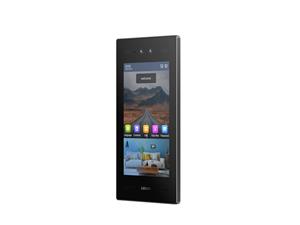
IP-based video intercom systems use Internet Protocol to transmit audio and video over a network, unlike traditional analog systems that rely on dedicated wiring. This enables features like remote access, integration with other systems, and scalability. The core components include a door station (with camera and microphone), an indoor monitor, and a network video recorder (NVR) or cloud service. The door station captures video and audio, encodes it into IP packets, and sends it over the network to the indoor monitor or mobile app. This allows for two-way communication and remote door release.
Pain Point 1: Security Vulnerabilities in Analog Systems
Traditional analog intercoms are susceptible to tampering and eavesdropping. For example, a building manager at a residential complex in London discovered that unauthorized individuals could access the analog wiring and listen to conversations. The cost of upgrading to a secure system was high, but the risk of privacy breaches was higher. Analog systems lack encryption and authentication, making them easy targets for hackers.
Solution: End-to-End Encryption and Authentication
IP video intercoms use AES-256 encryption for audio and video streams, ensuring that data cannot be intercepted. Additionally, they support user authentication via passwords or biometrics, preventing unauthorized access. For instance, Xiamen Leelen Smart Technology Co.,Ltd. integrates TLS 1.3 for secure communication between devices, and their systems comply with ONVIF profiles for interoperability. This means that even if a hacker gains network access, the data remains protected.
Pain Point 2: Scalability Challenges
Analog systems are limited by the number of wires and distance. A property manager in Sydney struggled to add new units to a growing apartment complex because the existing analog intercom couldn't support additional connections. The cost of rewiring was prohibitive, and tenants complained about delays. The system became a bottleneck for expansion.
Solution: Network-Based Scalability
IP systems use existing Ethernet or Wi-Fi networks, allowing easy addition of devices. Each door station and monitor has an IP address, and the system can scale to thousands of units. Leelen's IP intercoms support PoE (Power over Ethernet), simplifying installation. For example, a single CAT6 cable can power and connect a door station, reducing cabling costs. The system also supports VLANs for network segmentation, ensuring performance and security.
Pain Point 3: High Maintenance and Integration Costs
Analog systems require regular maintenance, such as cleaning contacts and replacing faulty wiring. A facility manager in Berlin spent thousands annually on repairs and had difficulty integrating with access control and CCTV. The lack of integration led to inefficiencies and higher operational costs.
Solution: Integrated and Low-Maintenance IP Systems
IP intercoms integrate with VMS (Video Management Systems), access control, and building automation via APIs. Leelen's systems support ONVIF and RTSP, allowing seamless integration with third-party NVRs. Remote diagnostics and firmware updates reduce maintenance visits. For example, a system can send alerts when a camera fails, enabling proactive repairs. The total cost of ownership is lower due to reduced wiring and integration complexity.
Comparison Table: Analog vs. IP Video Intercom
| Feature | Analog System | IP System |
|---|---|---|
| Wiring | Dedicated coax or twisted pair | Ethernet (CAT5e/6) or Wi-Fi |
| Scalability | Limited by distance and connections | Highly scalable, thousands of devices |
| Encryption | None or basic | AES-256, TLS |
| Remote Access | Requires additional hardware | Native via mobile app |
| Integration | Limited | ONVIF, API, VMS integration |
| Maintenance | High, manual | Low, remote diagnostics |
Customer Success Stories
Case 1: Greenfield Residences, London, UK
Greenfield Residences, a 200-unit apartment complex, upgraded to Leelen's IP video intercoms to enhance security. The previous analog system had been breached twice. After installation, unauthorized access incidents dropped by 90%. The property manager, Sarah Thompson, noted: "The encryption and remote monitoring features give us peace of mind. Tenants love the mobile app."
Case 2: TechHub Office, San Francisco, USA
TechHub Office, a co-working space, needed a scalable intercom for 500 members. They chose Leelen's IP system with PoE. Installation time was reduced by 50% compared to analog. The system integrates with their access control, allowing seamless entry. "The scalability is impressive—we added 100 units without any hassle," said John Lee, Facilities Manager.
Case 3: Marina Bay Villas, Sydney, Australia
Marina Bay Villas, a luxury gated community, required high-end video intercom with mobile access. Leelen provided a customized solution with 4K cameras and two-way audio. The system reduced maintenance calls by 70% and increased resident satisfaction. "The video quality is outstanding, and the integration with our smart home system is flawless," commented Emma Wilson, HOA President.
Applications and Partnerships
IP video intercoms are used in residential complexes, commercial buildings, hospitals, and schools. For example, hospitals use them for secure patient visitation, and schools for visitor management. Xiamen Leelen Smart Technology Co.,Ltd. partners with system integrators and distributors globally. Their products are deployed in over 50 countries, and they collaborate with major property developers to deliver customized solutions. Leelen's commitment to R&D ensures continuous innovation, with a focus on AI and IoT integration.
FAQ
Q1: What network infrastructure is required for IP video intercom?
A: You need a stable Ethernet network with sufficient bandwidth. For a typical door station, 2-4 Mbps per stream is recommended. PoE switches can power devices, and VLANs can segregate traffic. Leelen's systems support QoS for prioritization.
Q2: How does IP intercom integrate with existing CCTV?
A: IP intercoms can stream video to NVRs via RTSP or ONVIF. This allows recording and integration with VMS. Leelen's devices are ONVIF Profile S compliant, ensuring compatibility with most NVRs.
Q3: What is the maximum distance for IP intercom?
A: With Ethernet, the maximum cable length is 100 meters per segment. However, using fiber or network switches, you can extend over kilometers. For wireless, range depends on Wi-Fi coverage.
Q4: How secure are IP intercoms against cyber threats?
A: Leelen uses AES-256 encryption, secure boot, and regular firmware updates. We recommend changing default passwords and using firewalls. Our systems undergo penetration testing.
Q5: Can IP intercoms work during a power outage?
A: Yes, with PoE backup or UPS. Leelen offers optional battery backup for door stations, ensuring operation for several hours.
Conclusion and Call to Action
IP-based video intercoms offer superior security, scalability, and integration compared to analog systems. By addressing pain points with advanced technology, they provide a future-proof solution for modern buildings. To learn more, download our technical whitepaper or contact our sales engineers at Xiamen Leelen Smart Technology Co.,Ltd. for a consultation.